

















When a player executes a frame-perfect parry or lands a long-distance headshot, the immediate focus is on the screen and the controller. However, the true architect of that seamless moment is a massive, invisible network of hardware and software working in total synchronicity. Modern gaming has evolved beyond local processing: it is now a symphony of data transmission where the distance between victory and defeat is measured in milliseconds. Understanding what happens behind the monitor reveals a complex ecosystem designed to keep millions of players connected without a stutter.
The Foundation of Performance
Digital landscapes are no longer static files sitting on a hard drive. They are living environments that require constant updates and real-time verification. While your GPU handles the visual splendor, the backend infrastructure manages the logic of the world. This includes everything from player positions and inventory states to the complex physics calculations of a collapsing building in a destructible environment. Without a robust backbone, even the most powerful home PC becomes a glorified paperweight in a multiplayer setting.
Current Landscape of Gaming Infrastructure
The sheer scale of today’s digital ecosystems is staggering. As we look at the latest PC and console games industry data, it is clear that live service models are the primary drivers of long-term engagement. These games do not just launch: they live and breathe through constant server-side iterations. This shift has forced developers to move away from peer-to-peer connections toward more stable, centralized solutions.
Reliability is the currency of the modern developer. High-performance gaming environments depend on the role of dedicated servers to maintain stability. These systems are specifically engineered to manage massive amounts of player data and complex real-time interactions while ensuring 100% uptime for global audiences. To achieve this, companies often utilize rackmount server hardware solutions that provide the scalability and compute density needed to host thousands of simultaneous matches without degrading the user experience.
The Latency-First Architecture
In the world of competitive play, latency is the ultimate antagonist. Developers now employ what I call the Proximity-Sync Optimization Model to combat this. This framework prioritizes regional data centers to ensure that the physical distance between the player and the server is minimized. By distributing the workload across a global grid, studios can provide a “local” feel to a global game.
- Regional Edge Nodes: Deploying servers closer to urban hubs to reduce ping.
- Predictive Netcode: Using AI to anticipate player movement and mask minor packet loss.
- Load Balancing: Shifting traffic dynamically to prevent any single server from bottlenecking.
- Packet Prioritization: Ensuring critical game state data moves faster than secondary background information.
The industry is seeing a significant transformation in game technology reports as AI begins to automate these server-side optimizations. Instead of manual adjustments, modern backends can now self-heal and scale based on player surges during a new season launch or a major tournament.
Infrastructure vs. User Experience
| Component | Role in Gaming | Impact on Player |
| Tick Rate | Frequency of server updates | Determines precision of hits and movements |
| Bandwidth | Volume of data transferred | Affects the complexity of the game world |
| Dedicated Hardware | Physical server resources | Prevents “host advantage” and lag spikes |
| Content Delivery Network | Asset distribution | Determines speed of patches and updates |
To maintain this level of service, the global market for server revenue has seen massive growth as hyperscalers expand their reach. This investment ensures that as games become more visually demanding, the underlying systems can keep pace with the increased data throughput required for 4K streaming and high-fidelity physics.
How to Optimize Your Network for High-Performance Gaming
- Hardwire Your Connection: Always use an Ethernet cable to eliminate the packet loss inherent in wireless signals.
- Select the Right Region: Manually choose the server data center with the lowest ping in your game settings.
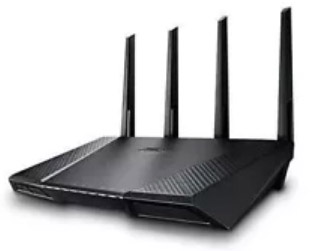
- Update Router Firmware: Ensure your networking hardware is running the latest software to handle modern traffic protocols.
- Manage Background Traffic: Disable bandwidth-heavy applications like cloud backups or 8K video streams while playing.
- Monitor Your Ping: Use in-game telemetry tools to identify if lag is caused by your ISP or the game’s backend.
As developers continue adapting to gaming reports that emphasize community-driven live services, the pressure on infrastructure will only increase. The move toward “forever games” means that a server is no longer just a host: it is the heart of a digital society.
The Future of Global Connectivity
The next frontier involves even tighter integration between the hardware and the cloud. By looking at the global interconnection index data, we see that the physical placement of these server racks is becoming as important as the code itself. When the hardware is placed at the very edge of the network, the delay between a button press and an on-screen action virtually vanishes. This level of technical sophistication is what allows for the massive, 100-player battles that have become the standard for the current generation of gaming.
Frequently Asked Questions
What is a good ping for competitive online gaming?
A ping under 20ms is considered elite: while anything between 20ms and 50ms is excellent for most players. Once you exceed 100ms, the delay becomes noticeable in fast-paced titles.
Why do games require dedicated servers instead of peer-to-peer?
Dedicated servers provide a neutral ground that prevents one player from having a “host advantage.” They also offer better security against cheating and more stable connections for large groups.
How does server tick rate affect my gameplay experience?
The tick rate is the number of times a server updates per second. A higher tick rate, such as 64 or 128, results in smoother and more accurate registration of your actions.
What causes server lag during major game launches?
Lag usually occurs when the number of login requests exceeds the server’s capacity. This creates a bottleneck as the system struggles to process data for too many players at once.
Can better server hardware actually improve my win rate?
While hardware won’t give you skill, high-performance backend systems ensure that your inputs are registered accurately. This eliminates “cheap” deaths caused by lag or desync.
The complexity of modern gaming is a testament to human ingenuity. The next time you log into your favorite world, take a moment to appreciate the silent power of the racks and wires that make your digital adventures possible. Beyond the screen lies a masterpiece of engineering that is just as impressive as the game itself.